
The PERSEUS system
A platform-agnostic reasoning layer that sits between a host UGV’s sensors and its mission, perceiving the environment, applying doctrine, and advising the next tactical action with full traceability.
Advise, don’t drive.
PERSEUS is not a self-driving stack and not a sensor product. It is the trusted reasoning that sits on top of whatever platform you already operate, taking that platform’s feeds, interpreting the tactical situation, and recommending action a human and the host control stack remain free to accept or reject.
Because the reasoning is separated from both perception and actuation, each layer can be inspected and validated on its own terms. That separation is what makes the system auditable, and what makes it credible to an evaluator.
Eyes, Brain, Body, and the boundaries between them.
Three subsystems, strictly separated by enforced rules. The boundaries are checked at every commit by an automated guardrail, perception cannot recommend movement, reasoning cannot emit actuator commands, and sensor SDK types never leak past the adapter.
Eyes ingest the host platform’s raw feeds and produce descriptive truth only, what the world looks like, never what to do about it.
- Ingest, synchronisation & deterministic record / replay
- Environment, terrain, occupancy & occlusion modelling
- Exposure and blind-sector analysis
- Per-input trust, freshness & uncertainty
Brain consumes the Eyes model plus platform state and mission context, and applies deterministic doctrine to produce explainable advice.
- Candidate generation
- 13 constraint gates
- Weighted scoring & doctrine tiers
- Correction ledger & per-cycle audit trace
Body is the downstream scaffold that carries bounded guidance to the host over the interoperability boundary. It does not bind to real actuators.
- SAE AS-4 JAUS mobility messaging
- SafetyExecutor simulation path
- Host accepts / rejects guidance
- No doctrine re-implementation
Documented to NAF v4.1.
PERSEUS is described against the NATO Architecture Framework (NAF v4.1, ISO/IEC 42010), the same formal language a defence architecture review uses. These are the published logical, capability and resource viewpoints, the artefacts an evaluator reads to assess structure, scope and traceability.
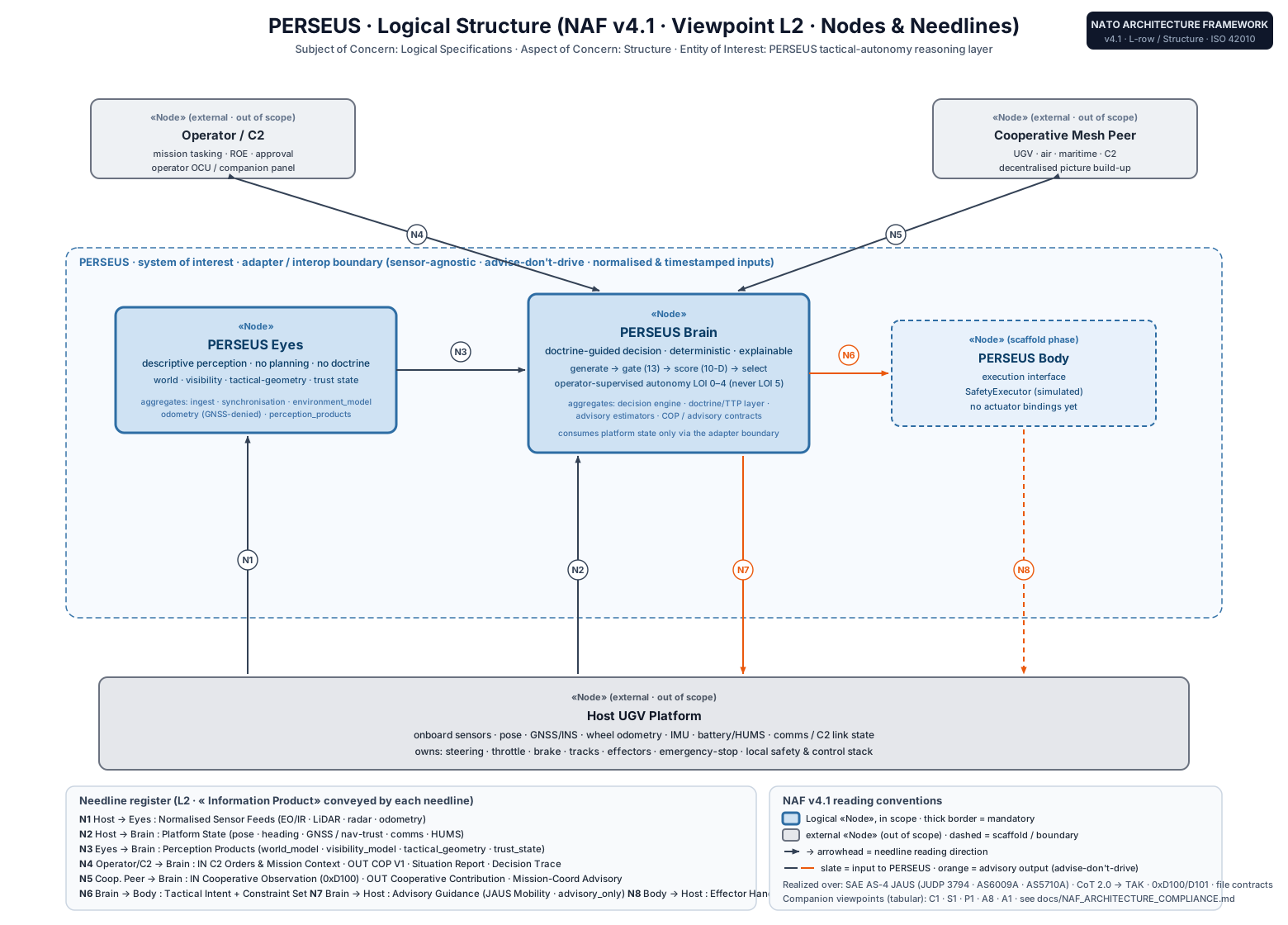
The logical nodes (Eyes, Brain, Body) inside the system-of-interest boundary, the external nodes (operator/C2, cooperative mesh peer, host UGV platform), and the eight needlines that carry information products, with advisory outputs distinguished from inputs.
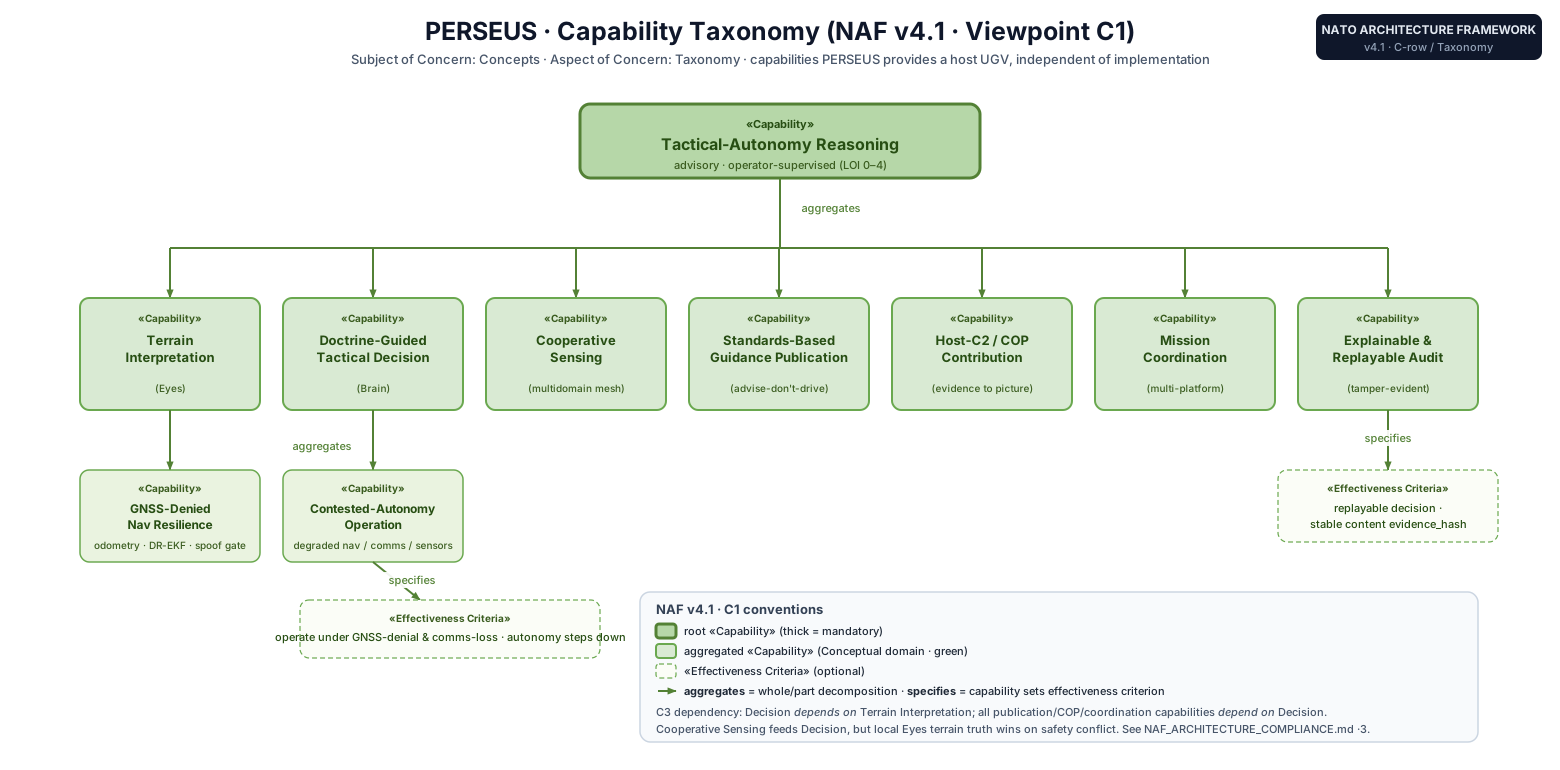
The capabilities PERSEUS provides a host UGV, independent of implementation, decomposed from the root tactical-autonomy reasoning capability down to GNSS-denied navigation resilience and contested-autonomy operation, with their effectiveness criteria.
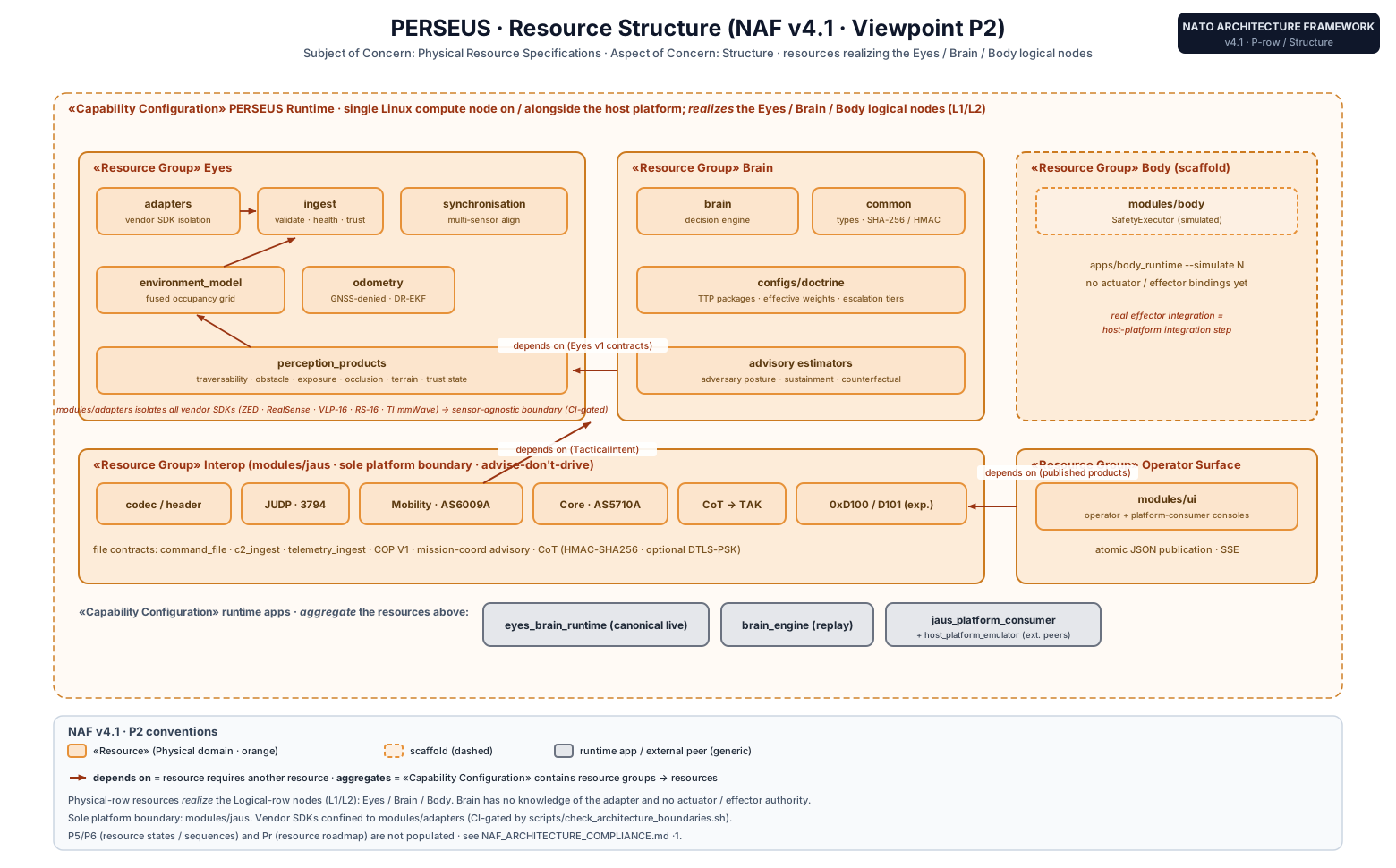
The physical resources that realize the logical nodes, runtime modules grouped under Eyes, Brain, Body, Interop and the operator surface, with vendor sensor SDKs confined to adapters behind a CI-gated, sensor-agnostic boundary.
How a single decision is made.
Every advisory is the product of the same deterministic pipeline, which is exactly why it can be replayed, audited, and explained to a reviewer line by line.
Generate
Brain proposes a set of candidate tactical actions from the current Eyes model, platform state and mission context.
Gate
Each candidate passes through 13 constraint gates. Anything that violates a hard constraint is filtered out before scoring.
Score
Surviving candidates are scored by weighted criteria and ranked within doctrine tiers, the structure encodes the tactical intent.
Explain & record
The chosen advisory is emitted with its rationale, a correction-ledger entry, and a hash-anchored audit trace for replay.
No proprietary kit required.
The development sensor rig, stereo cameras, LiDAR, radar, a Jetson-class compute node, exists only to validate Eyes, timing and evidence generation. It is not a product dependency.
- In deployment, host adapters emit the same sensor-neutral v1 input contracts from the platform’s own feeds.
- Zero sensor / camera / LiDAR / radar / GNSS identifiers in the Brain, doctrine or perception-products layer, audited at every commit, 0 hits.
- Runs on an appropriate Linux compute node aboard the host platform.
“PERSEUS does not require Praesidium-owned cameras, LiDAR, radar, or any specific compute box. Those assets are development and validation equipment only, not a product dependency.”
See the capabilities in detail.
Explore how PERSEUS maps to NATO DIANA multidomain-autonomy requirements, or dive into the standards and evidence behind it.

